A New Churching of Women
A communal liturgy for grief after abortion, pregnancy loss, and all the church has left unspoken
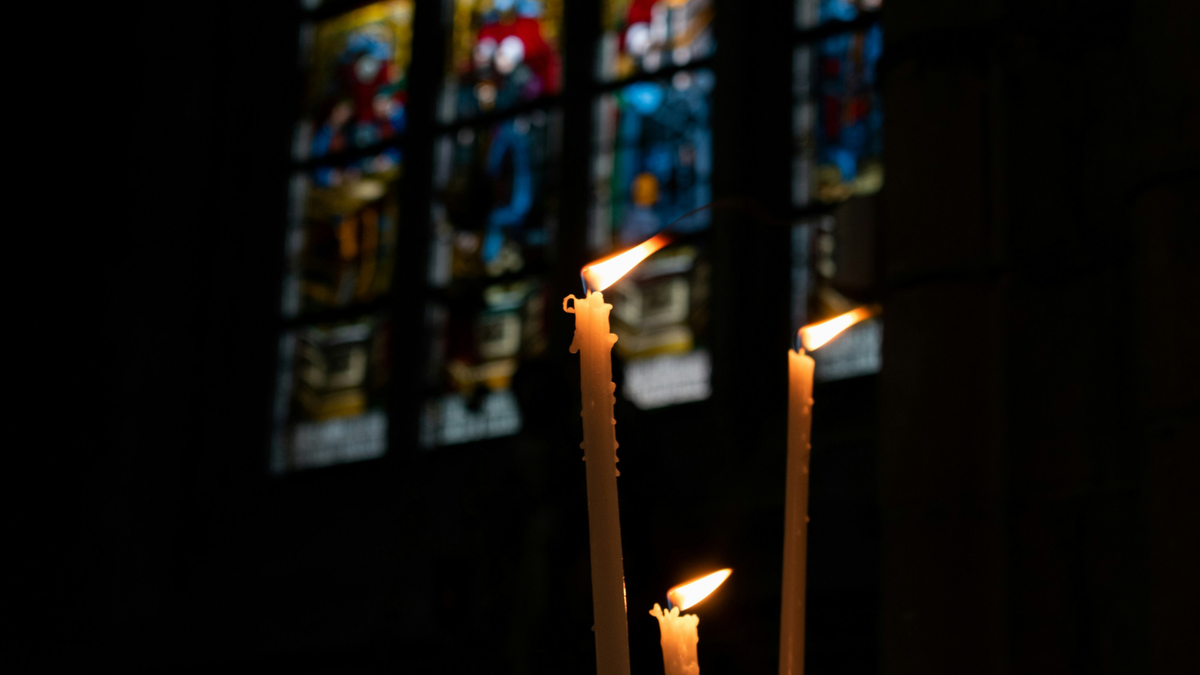
There is a blessing for the child who is born. This is for everything else.
For the losses the church has never made room to name — abortion, miscarriage, the birth that brought grief instead of joy, the body that was never the same — and for the women who carry them. However you came to this page, you are welcome here. Your whole experience is welcome here.
This is a communal liturgy, written to be led in a group — a women's circle, a church gathering, a few friends around a table. You are warmly invited to make it your own.
A Note for the Facilitator
For centuries, the church held a ritual called the Churching of Women — a liturgy performed forty days after a woman gave birth, in which a priest would give thanks to God for her safe delivery from what the Book of Common Prayer called "the great pain and peril of child-birth." It was, in many ways, the church at something like its best: a ritual that centered the woman's body, her pain, her survival. Partly because of concerns that the ritual emphasized an antiquated view of childbirth as unclean or impure, over the years it was replaced by "Thanksgiving for the Birth or Adoption of a Child," which took away the significance of centering the mother's experience.
In her book Unmaking Mary, author Chine McDonald writes,
"Imagine a world in which the Church was the place that opened its doors once again to women who have found themselves bewildered after becoming mothers... it could be the Church's reparation for its collusion with the myth of perfect motherhood that leaves little room for women to grieve or seek healing for their broken bodies."
Women need a sacred space to name all the outcomes of pregnancy that weren't named in the original Churching of Women. For the decisions, the losses, the complications the tradition never made room for — there was never a ritual. No liturgy. No balm.
This is that reimagined liturgy. I offer it in the spirit of the tradition, and in full awareness of what the tradition left out. We name abortion plainly and without apology as reality the church still often refuses to hold. We expand the Churching to include every woman whose body has carried something, and whose heart has needed a place to set it down.
How to use this liturgy: Facilitator lines are in regular type. Communal responses are marked "All" and set in bold. Stage directions are in brackets and italics. If you'd like, you can prepare a candle for each participant or one central flame, and a space where people can see one another — a circular arrangement of seating is suggested when possible. If you intend to share communion, prepare bread and cup before you begin.
Threshold: Entering This Space
[Distribute candles before you begin, unlit. Light yours first, then invite participants to light theirs from yours or from a central flame. Do this in silence.]
[Scripture to put on screen, if desired, or read aloud by facilitator]: Awake, O sleeper, rise from the dead — and the light will shine on you. (Ephesians 5:14)
We light these candles as an act of witness. We are crossing a threshold and what is outside can wait. We have entered a space held for us.
Gathering
We have gathered because we carry things the church has not given us a place to set down. We have gathered because grief remains when it goes unnamed. We have gathered because women's bodies, women's losses, women's choices have been spoken about for centuries —
All: and rarely spoken with.
This is a space where we speak with one another. Where we name what has been held in silence. Where we grieve without expecting a particular performance of grief, and receive without judgment. You are welcome here.
All: We are welcome here.
Naming
There are so many outcomes of pregnancy the church never made room to name. The pregnancies that ended before anyone knew to celebrate them. The births that came with grief instead of joy. The bodies that were changed, or harmed, or never the same. The children not carried to term, and the children carried and released. The church had a blessing for safe delivery — and silence for nearly everything else.
We are here, in part, to break that silence.
And we are here because abortion, especially, is something women carry alone. The decision itself. The grief that sometimes follows. The grief we were told we weren't allowed to feel. The grief we felt alongside relief, alongside love, alongside certainty. All of it. I name abortion plainly, and without apology, as something that belongs in this room — in the company of women who know, who love, who hold one another.
Before I ask anything of you, I will go first.
[The facilitator may share her own story here. If she wishes, she may read the following passage from Faithfully Dissident Daughters by Chelsea Kim Long, or speak in her own words.] Chelsea writes:
"My church growing up venerated motherhood as the ultimate goal for Christian women. I imagined motherhood and domestic bliss would be the reward for my obedience to white evangelicalism. Instead, it dragged me through trauma and landed me in another moment where I found no comfort in my faith. I didn't know God as a compassionate, loving Mother. I immediately felt God as a judgmental Father staring at me from above — when what I needed was a God who held me close, whispering that she would be with me every step of the way."
[A moment of silence.]
This is the God we make room for here. Not the one who stares down from above, but the one who holds us close. Not the Father who judges, but the Mother who stays.
All: Hold us close.
Now — the circle is open. What she named, you may name too.
If you are willing and able, speak your loss into this space — an abortion, a pregnancy, a child, a version of yourself you had to let go, a future you released, a grief that has had no home until now. Speak it as simply or as fully as you need. We will receive what you offer without response, without advice. You will simply be heard.
[Allow the circle to move at its own pace. Do not rush the silence. Not everyone needs to speak. The silence of those who do not is also received.]
What has been spoken here stays here. What has been carried here is held here.
All: We have been heard.
Kyrie
[Invite those who are able to kneel, together, as the ancient posture of this prayer. Those who cannot kneel may lower their eyes or open their hands.]
God, have mercy.
All: God, have mercy.
Christ, have mercy.
All: Christ, have mercy.
God, have mercy.
All: God, have mercy.
[A moment of silence. Let it hold what was named.]
And now, together, we rise.
[All who knelt rise to standing, or lift their eyes, as they are able.]
Breath / Body
Your body has been through something. Whether you feel it mostly in your heart, your mind, your chest, your belly — your body has carried this. Place both hands wherever your body is asking to be touched right now.
[Breathe audibly with the room.]
Breathe in together. And out. There is no part of your body that is shameful. There is no part of your body that has been abandoned.
All: We are still whole.
Lament
Grief does not always make sense. Sometimes it sits alongside relief. Sometimes it lives right next to love. Sometimes it shows up weeks later — in the shower, in a parking lot, in the middle of a perfectly ordinary day. Whatever is rising in this room right now — let it.
[Scripture to put on screen, if desired, or read aloud by facilitator]: God is close to the brokenhearted and saves those who are crushed in spirit. (Psalm 34:18)
[Scripture to put on screen, if desired, or read aloud by facilitator]: In the same way, the Spirit helps us in our weakness. We do not know what we ought to pray for, but the Spirit intercedes for us through wordless groans. (Romans 8:26)
Even when we have no words, the Spirit is interceding with us. Even our groaning is held. Grief after loss is real. It is not a sign we chose wrong.
All: It is a sign that we loved.
We are allowed to feel the weight of this.
All: And we are allowed to set it down.
We are not broken.
All: We are living with the full complexity of being human.
The Womb of God
There is an ancient Hebrew word: racham. It is the word we see in our Bible as compassion that also means womb. The most sacred word the ancient writers had for God's mercy was a womb word. Compassion, at its origin, is womb-love.
All: God loves us with womb-love.
This means that when the tradition speaks of God's deep compassion, it is reaching for the most intimate image it knows: a body that holds. A love that carries. A space that does not require you to earn your welcome. We have been held in that kind of love — a love that knows what it is to contain life, to feel it move, to let it go. The divine is not outside our experience. The divine is in the very word for the love we're talking about.
[Scripture to put on screen, if desired, or read aloud by facilitator]: Can a mother forget the infant at her breast — forget the baby she carried? Even if she could, I will not forget you. I have inscribed you on the palms of my hands. (Isaiah 49:15)
All: We are not forgotten. We are held.
A Declaration
We may have been told that faith and our losses cannot coexist.
All: We were told wrong.
We are persons of worth.
All: And that has not changed.
We are held by a compassion we did not have to earn.
All: Womb-deep. Ancient. Ours.
Our bodies are not our enemies.
All: They are the places where the presence of God dwells.
Our grief is allowed to be here.
All: And so is our peace.
We do not owe anyone our shame.
All: We owe ourselves our own healing.
Witness
Look around this room.
[Pause to let people look.]
You have not carried this alone today. What was named in this room was received in this room. Your loss has been witnessed. Now we will mark that witness on one another's bodies by anointing the forehead of a woman near you. As you anoint the woman beside you, you may say to her: I see you. You are held.
All: I see you. You are held.
[Pass the oil around the circle or place in the center of the circle. Invite each woman to anoint the woman beside her — a small mark of oil on the forehead — until everyone who wishes to be anointed has been. Those who prefer not to be touched may anoint themselves, or receive the words without the oil.]
You have been marked as one who was seen here. Not marked as broken. Not marked as unclean. Marked as witnessed, and beloved, and held.
To everyone in this room who held someone else's story today: thank you. To everyone who was brave enough to name their own: you have been seen.
All: We see each other.
The Prayer of Jesus
A call and response, adapted by the Dominican Sisters. The facilitator reads the traditional line; the group responds with the words in bold.
Our Father (Our Mother)
Who art in heaven (Who are in all the earth)
Hallowed be thy name (Holy is your truth)
Thy kingdom come (May your wisdom come)
Thy will be done, on earth as it is in heaven (Your circle be one, uniting heaven and earth)
Give us this day our daily bread (Give us today a nurturing spirit)
And forgive us our trespasses as we forgive those who trespass against us (Heal through us as we ourselves are healed)
Lead us not into temptation (Lead us into fullness of life)
But deliver us from evil (And liberate all that is good)
For thine is the kingdom, the power and the glory (For the Wisdom, the Presence, and Goodness are yours)
Now and forever. Amen.
Blessing
May our bodies be honored — the bodies that have carried and released, the bodies that have held and chosen. May the love that was present in our hardest decisions be seen for what it was:
All: Love.
May our grief be held without a timeline. May our peace arrive without apology.
[Scripture to put on screen, if desired, or read aloud by facilitator]: I will turn your mourning into gladness. I will give you comfort and joy instead of sorrow. (Jeremiah 31:13)
May we find, in the womb-love at the center of all things, a space that was made for exactly this — the full, complicated, sacred weight of our experience.
All: May we be met there.
So be it.
All: May it be so.
Sending
We are not the first women to grieve this. We will not be the last. We are held by every woman who has sat with this in the quiet — who has made the hard choice and kept living, who has loved and let go and found that both things could be true at once. We carry this with us. Not as wounds that define us, but as part of the story of women who chose each other. Go gently.
All: We are not alone. We are welcome here. We have always been welcome here.
Optional: Communion
[This may be inserted before the Blessing. It's offered as an option if desired and if time allows. If clergy are present and the setting calls for it, this may be a full celebration of the Eucharist. In a women's circle, it may be a simple agape meal. Adapt freely.]
Before we are sent, we share a table. This bread was once buried grain. It was broken open in the dark ground before it ever became bread. It knows what it is to be broken, and to be made into something that feeds.
[Break the bread.]
Take, and eat. You are nourished by a love that has been broken too, and lives.
All: We receive it.
This cup is poured out, as so much has been poured out from our own bodies — blood, grief, love, life. Nothing that is poured out in love is wasted.
[Pour or lift the cup.]
Take, and drink. You are held by a love that pours itself out and is never emptied.
All: We receive it.
[Share the bread and cup around the circle, each woman serving the next if desired. Let it be unhurried.]
Sources & Acknowledgments
Chine McDonald, Unmaking Mary: Shattering the Myth of Perfect Motherhood (Hodder Faith, 2025).
Chelsea Kim Long, Faithfully Dissident Daughters: Reclaiming Christian Womanhood Beyond Patriarchy (Westminster John Knox Press, 2026).
The Churching of Women text is drawn from the Book of Common Prayer (Church of England) accessed at: churchofengland.org/prayer-and-worship/worship-texts-and-resources/book-common-prayer/churching-women
Scripture quotations are drawn from multiple translations, including the New International Version (NIV) and the New Revised Standard Version (NRSV).
Author
Chelsea Kim Long is a writer, lay theologian, and the author of Faithfully Dissident Daughters: Reclaiming Christian Womanhood Beyond Patriarchy (Westminster John Knox Press, 2026), a memoir-theology hybrid about finding the feminine divine within the Christian tradition rather than outside it. She writes and leads embodied gatherings on faith, grief, and the sacredness of women's bodies. Find her at faithfullydissident.com.